Augmented reality (AR) is changing the way we teach and train. From primary school classrooms to professional development, it’s opening up new possibilities for interactive, hands-on education. Complex ideas can become easier to explore, lessons more interactive, and learners more involved in the experience.
Here’s where AR can add real value to education and workplace training, from helping learners understand complex ideas to practising skills in a safe environment.
AR projected heart (with beating animation)
Making the abstract feel real
Bringing concepts to life
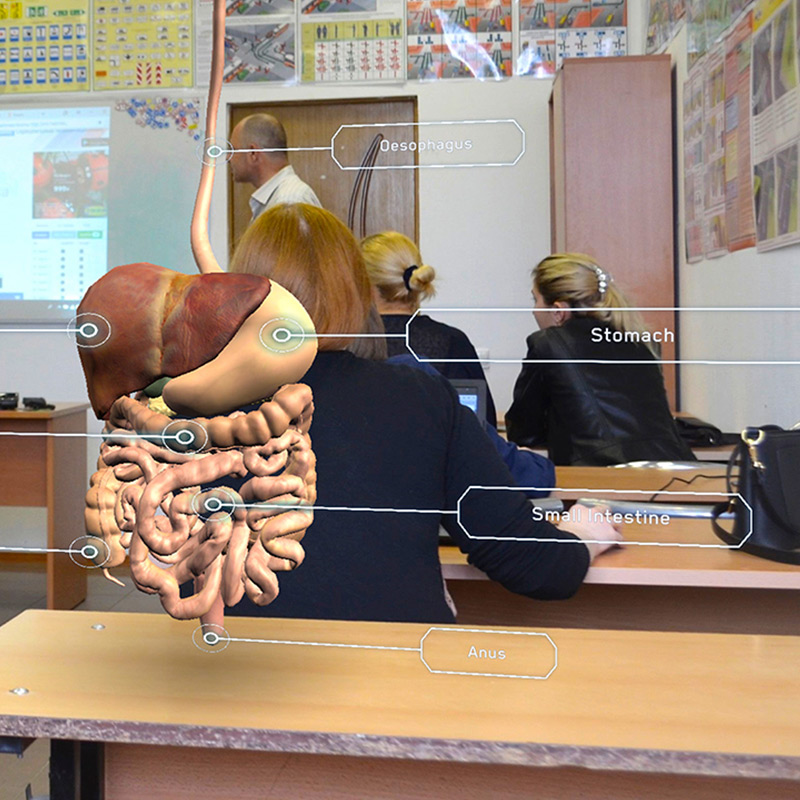
AR takes complex subject matter and makes it accessible. Imagine a biology class where students can explore a beating human heart in 3D instead of just looking at textbook diagrams. That gives learners another way to understand something that can be difficult to grasp from a flat diagram..
We saw this first-hand when we worked with Health Education England, Manchester Metropolitan University, and Greater Manchester Combined Authority on M-Care — a suite of AR resources for schoolchildren.
Our 3D models of human body systems gave pupils a more interactive way to explore anatomy in the classroom.
And it’s not just for schools. AR can support professional training too. If you’re studying to become a cardiothoracic surgeon, you’ll need hands-on practice — but an interactive AR model is a powerful way to start.
Strengthening understanding
By letting learners interact with digital models, AR bridges the gap between theory and visualisation. It’s an approach that helps students grasp concepts in maths, science, and beyond.
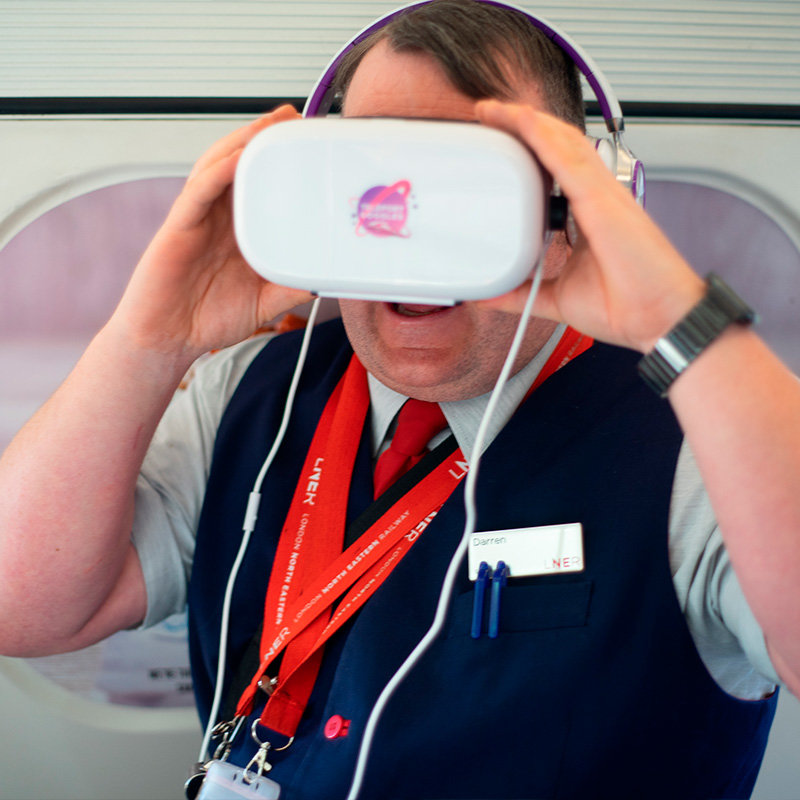
Member of train staff enjoying the Fantasia VR experience
Learning that’s active and engaging
From spectator to participant
AR turns passive learning into active exploration. Virtual field trips, historical reconstructions, and interactive exhibits let students experience lessons in new and memorable ways.
We put this idea into action when we designed an AR train app that detected landmarks and triggered interactive content. Picture the same approach in a school setting — an AR experience that brings historic sites like the Tower of London or Styal Mill to life, adding layers of detail that spark curiosity and deepen understanding.
Encouraging active learning
AR gives learners something to explore rather than simply observe. They can move around objects, inspect them from different angles and interact with information in context, making it particularly useful when spatial understanding or practical exploration is part of the learning process.
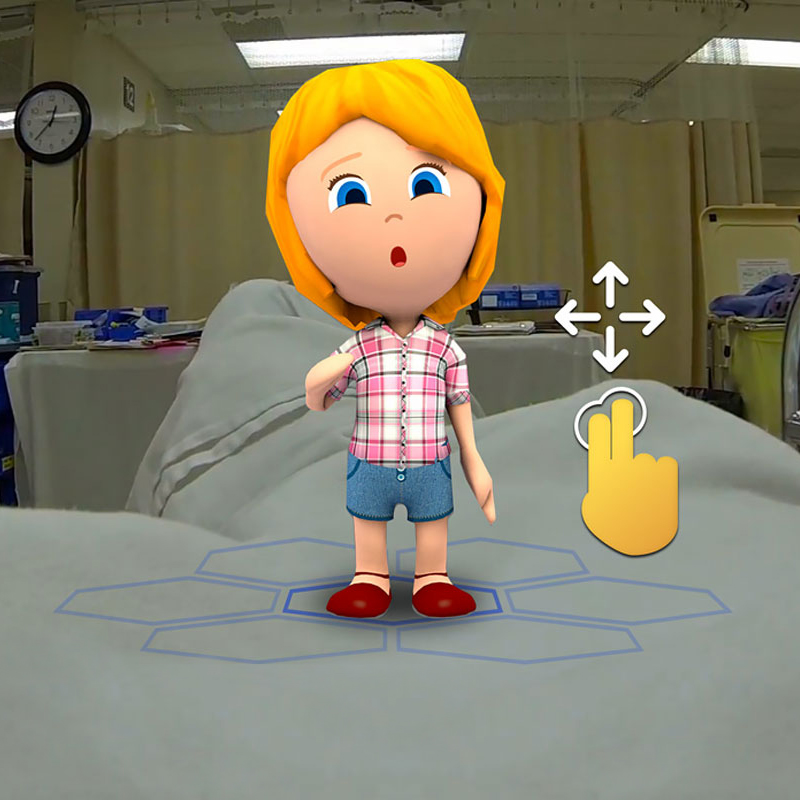
A user's Xploro buddy projected in AR
A more inclusive approach to education
Different ways to explore information
Learners don’t all engage with information in the same way. AR can combine 3D models, text, audio and interaction, giving people different ways to explore and understand a subject.
When we developed Xploro, a paediatric healthcare platform, accessibility was at the core of our thinking. We worked with children of different ages and medical backgrounds to make sure the platform worked for them. AR was one part of the experience, helping children explore hospital environments and medical equipment in an interactive and reassuring way.
Personalised learning
AR content can also be adapted for different ages, levels of knowledge and contexts. Combining text, imagery, audio and interactive elements gives designers more flexibility to present complex information in a way that suits the audience and the task.
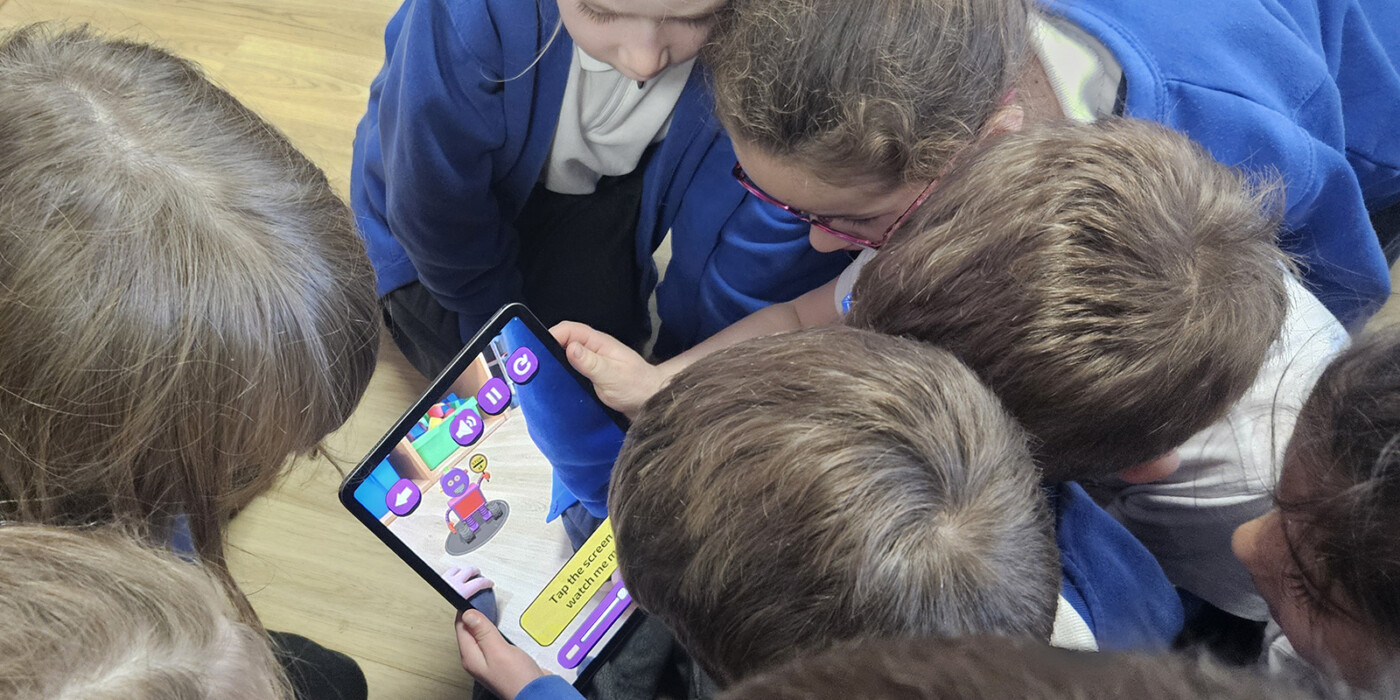
School children interacting with their co-design 'Roadbot' character
Bridging theory and practice
Hands-on training, without the risk
For industries like engineering, medicine, and technology, AR brings theoretical learning into the real world. Trainees can virtually dismantle machinery, examine complex systems or rehearse procedures before moving on to real-world practice.
Take MRI scanners, for example. With AR, students can ‘explode’ a 3D model, revealing every component—from the radio frequency coil to the patient table—gaining a deeper understanding of how it all works.
Real-world simulations
By replicating real-world scenarios in a safe digital space, AR allows learners to experiment, make mistakes, and refine their skills before applying them in practice.
Cost-effective, safe, and scalable training
Reducing risk
In fields where mistakes can be costly — or even dangerous — AR offers a safe environment in which to practise before working with the real thing. Lab technicians, for example, can practise handling volatile substances in a virtual environment before doing it for real.
Cutting costs, not corners
Supplementing physical materials with digital alternatives can make training more accessible. AR can reduce reliance on expensive equipment while still giving learners opportunities to explore how things work.
Enhancing traditional teaching
AR isn’t about replacing tried-and-tested teaching methods, it’s about enhancing them. The best approach is a balance: use AR to clarify complex concepts and encourage participation while keeping the personalised support that traditional teaching offers.
At Corporation Pop, we help educators and trainers integrate AR in a way that complements, rather than disrupts, their existing methods. The important thing is to start with the learning objective rather than the technology. AR works best when seeing, exploring or interacting with something helps people understand it better, not simply because adding AR is possible.
What’s next?
AR won’t improve every learning experience. But where a subject benefits from being seen in three dimensions, explored in context or rehearsed safely, it can give educators and trainers possibilities that conventional materials can’t.
We’ve been designing AR experiences for education, healthcare and training for years. If you have an idea and want to work out whether AR is really the right way to deliver it, we’d be happy to talk it through.
Thinking about using AR for education or training? Get in touch.
Get in touch