Royal Manchester Children’s Hospital needed a better way to manage detailed fatigue diaries. We designed ASARM, a secure digital patient diary and clinician portal that replaced paper records and has continued to evolve around the needs of patients and clinicians.
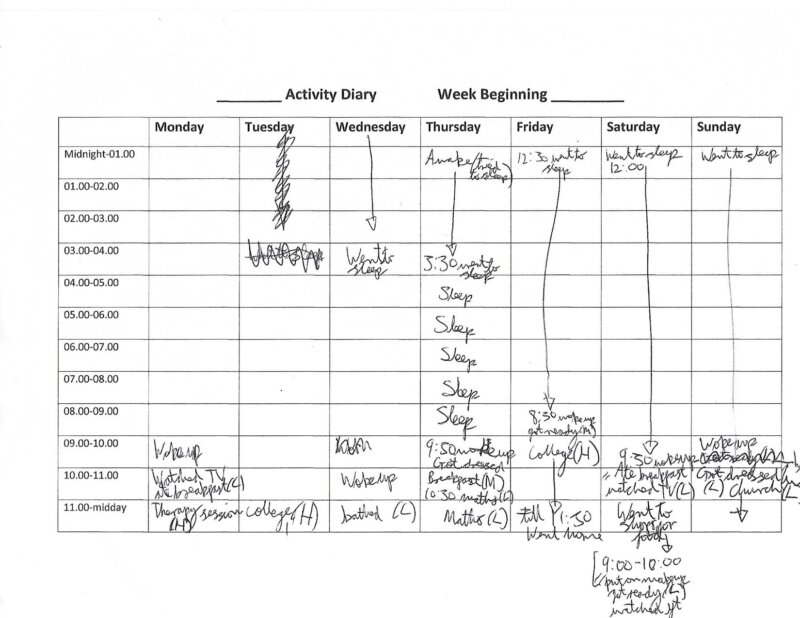
Patients had previously been asked to record every fifteen minutes of their day as sleep, rest or activity.
On paper, that sounded straightforward. In practice, it created problems at almost every stage.
They had to keep detailed diaries over several weeks, remember to bring them back to the clinic and sometimes explain entries that were difficult to read. RMCH clinicians then had to work through page after page, calculate totals and look for patterns by hand.
The process took time, made comparison difficult and left plenty of room for information to be missed.
ASARM’s first job was to make diary completion and review easier. Once the paper process had been replaced, clinicians could begin to do more with the information it collected. Patients could also be given a clearer role in understanding and following their treatment programme.
Launched in 2023, ASARM remains in active use, and Corporation Pop continues to maintain and develop it as new needs emerge.
Replacing paper diaries with structured information
The first challenge was turning a demanding paper diary into a digital patient diary that patients could realistically use throughout the day.
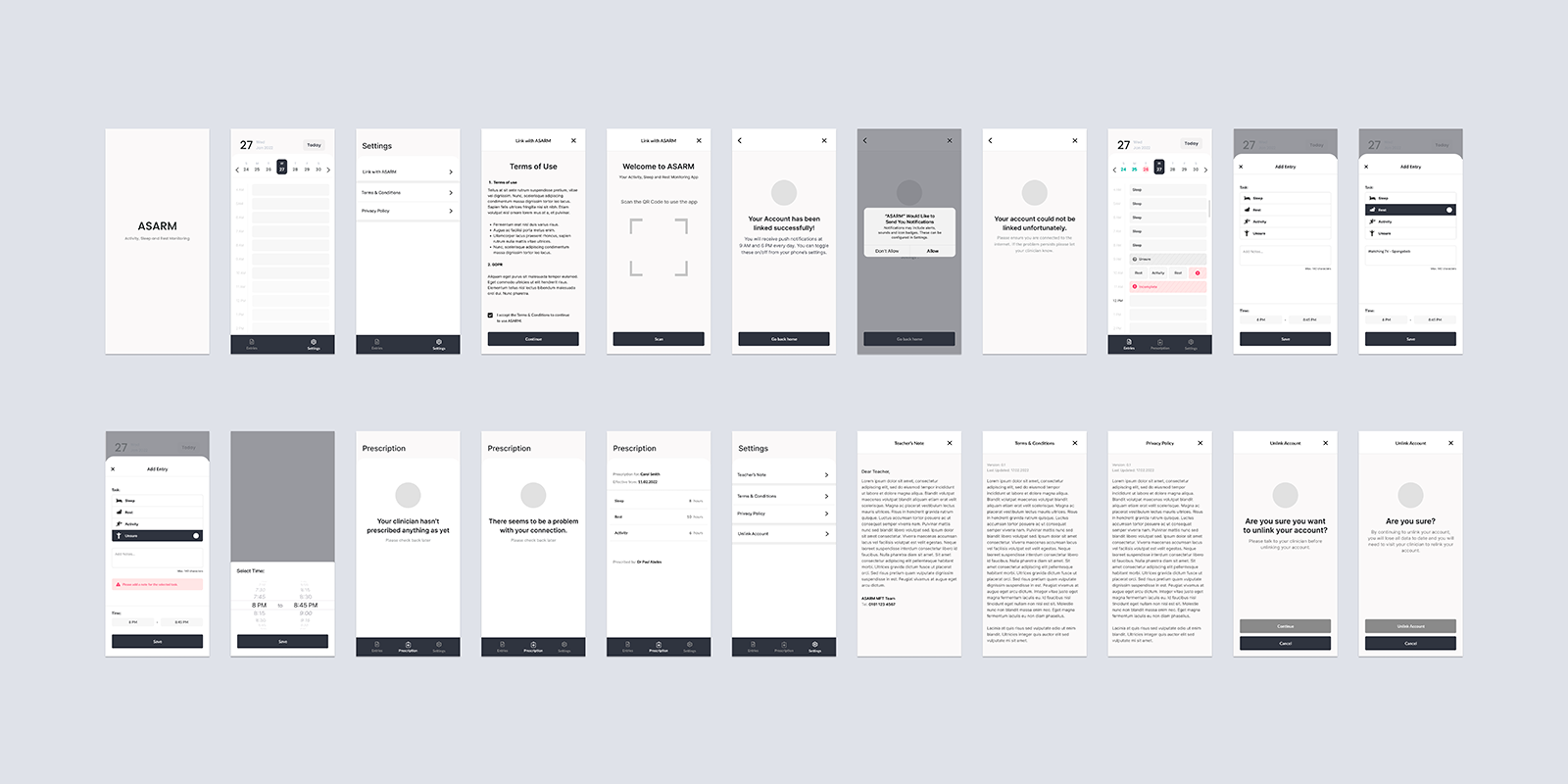
ASARM allows them to record sleep, rest and activity through a simple mobile interface. Notes can add context, while activity can be marked as low, medium or high intensity.
This gives clinicians more than a simple total of active hours. A quiet walk and a full day at school may take up a similar amount of time, but they can place very different demands on a patient.
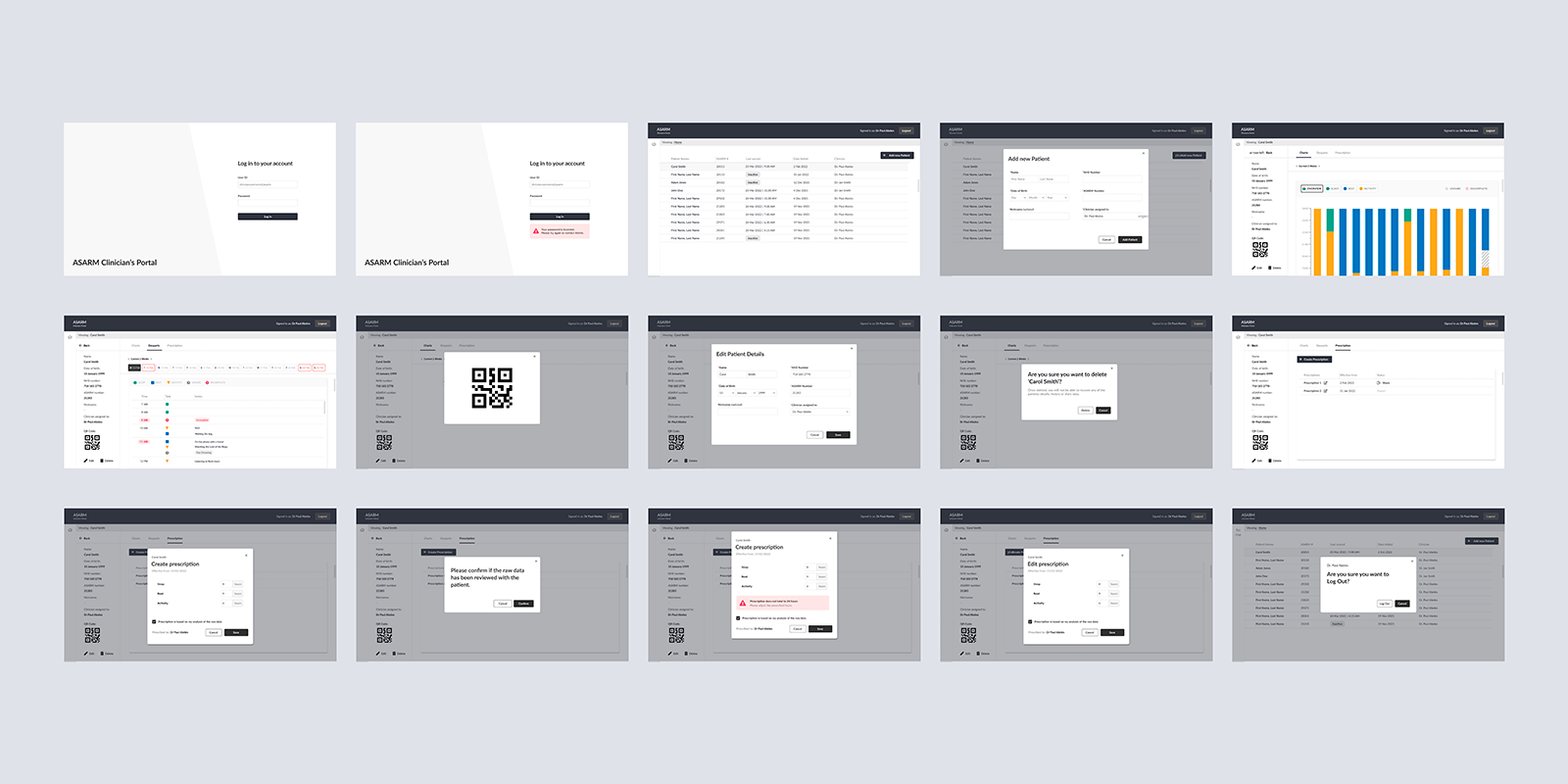
Because diary entries are structured from the start, the clinician portal can present them in charts rather than pages of handwriting. Staff can compare days, review activity intensity and identify gaps without calculating everything manually.
The clinician’s portal also makes the information easier to move into the wider patient record. Clinicians can download a visual PDF report and export the underlying diary entries as a CSV file when the data needs to be stored outside ASARM.
Digitising the diary solved the immediate problem. It also gave the clinician a much stronger basis for reviewing treatment.
Turning diary data into treatment decisions
Once clinicians could see the information more clearly, the next question was how to make it more useful during review.
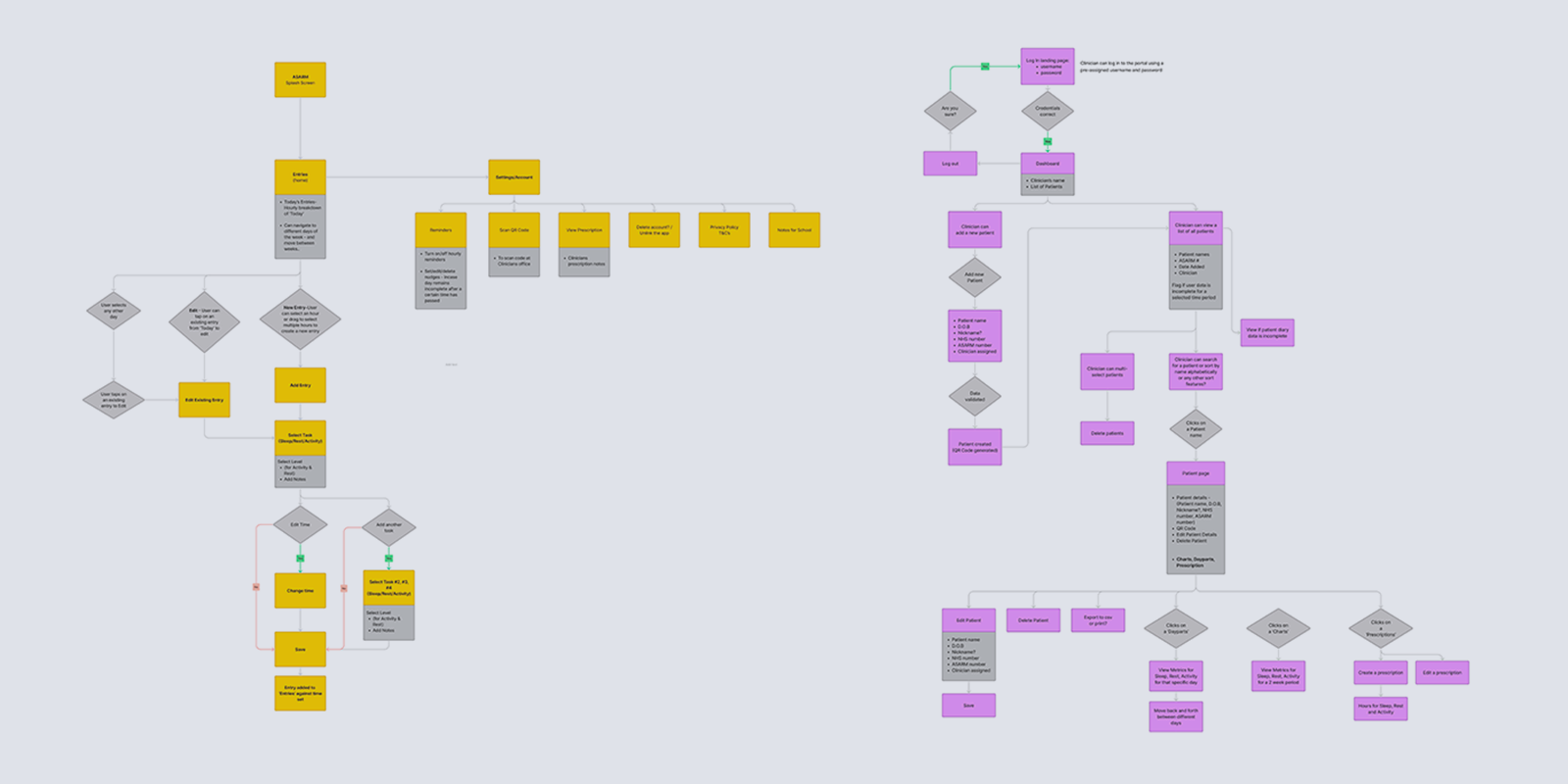
A prescription calculator now works out the patient’s average hours of sleep, rest and activity as well as the intensity of any activity. Those figures do not replace clinical judgement, but they remove the need for repeated manual calculations and provide a more consistent starting point for discussion.
Clinicians can then use the averages alongside what they know about the patient to agree a new balance of prescribed hours. If needed, they can ask a colleague or senior clinician to review the prescription before it is sent.
That prescription is sent back through the same system and appears in the patient app. It is linked to the calendar, so patients can see their current targets and look back at earlier prescriptions.
Diary entries can be reviewed and used to guide treatment without clinicians having to move between paper records and separate calculations.
Helping patients understand their prescription
Creating a prescription was only part of the job. Patients also needed a practical way to understand how they were tracking against it.
ASARM’s dashboard compares recorded sleep, rest and activity with the prescribed hours. Daily and weekly bar charts update as diary entries are added, giving patients a clear view of how their time is being divided.
Clinician-approved messages appear beneath the relevant metrics and change according to how the patient is tracking against their prescription. This gives patients some context around the numbers rather than leaving them to interpret the charts on their own.
Before this was introduced, they would have had to work out the totals themselves or wait until the next appointment. Now they can see the pattern as it develops.
The calendar keeps the prescription connected to the diary. Patients can review previous days, look back at earlier targets and see how their treatment has changed over time.
This does not turn recovery into a score. Its purpose is to remove guesswork and make the relationship between daily activity and prescribed hours easier to follow.


Encouraging use without making treatment feel like homework
A digital patient diary is only useful if people keep filling it in. For young patients already managing fatigue, that can be a challenge in itself.
ASARM uses tailored push notifications twice a day. The message depends on what is happening in the app.
Someone who has kept their diary up to date may receive encouragement. A patient with gaps can be reminded to complete them, while a separate notification appears when a new prescription is available.
Streaks and badges provide light-touch reinforcement, but the tone remains appropriate to a clinical setting. More than 50 clinician-approved messages help prevent reminders becoming repetitive.
We also added diary planning. Patients can prepare future entries for predictable parts of the day, such as school, appointments, rest periods or weekend socials.
Planned entries are shown differently from completed ones. They are not included in totals or sent to the clinician portal until the time has passed and the patient has confirmed what actually happened.
That makes planning easier without confusing intention with clinical data.
Helping clinicians see who needs attention
As ASARM became more useful to individual patients, clinicians needed a quicker way to understand what was happening across the whole caseload.
The patient list now shows whether someone has used the app in the past seven days, whether their recent diary is complete and when they last logged in. Staff can also see which build of the app is installed. This helps ensure patients are using the latest version and aren’t missing new features.
Email alerts reduce the need for manual checks across every patient account.
One is triggered when a patient has completed ten days of diary entries. At that point, there may be enough information to create their first prescription for sleep, rest and activity. Another warns the clinician after an extended period of inactivity, before the patient is removed in line with the hospital’s retention requirements.
The portal therefore does more than display records. It helps staff decide where their attention is needed.


Keeping onboarding simple
The app still had to be easy and intuitive to start using. A long registration process, forgotten password or lost username could have created another barrier before the diary had even begun.
ASARM avoids this through QR-code onboarding.
During an appointment, the clinician generates a unique code through the portal. The patient scans it to activate the app and link it securely to their record.
There is no patient username or password to remember. If the phone is lost or replaced, another QR code can be used to connect the account to a new device.
As an added security measure, each code expires after 24 hours and can only be generated through the clinician portal. The process remains quick for the patient while access stays under the hospital’s control.
Protecting sensitive patient data
Moving sensitive diary information into a digital system solved several problems, but it also meant the data had to be protected at every stage.
ASARM was designed around data minimisation from the outset. The system collects only what the service needs, and patient information is automatically removed in line with the hospital’s retention policy.
Clinicians receive a warning before inactivity leads to removal. Where information needs to form part of the longer-term patient record, reports and diary data can be exported and stored outside the live application.
The platform uses AWS Lambda, a serverless architecture that scales with demand while reducing the infrastructure that needs to be managed.
Corporation Pop is registered with the Information Commissioner’s Office and holds Cyber Essentials certification. Before launch, ASARM underwent penetration testing and passed first time.
Designing for patients experiencing fatigue
The interface had to work for people who may have limited energy, reduced concentration or sensory sensitivities.
We avoided bright primary colours in favour of muted greens, blues, pinks, oranges and neutral tones. A darker visual treatment also helps reduce unnecessary screen brightness.
Buttons are large and straightforward. Time controls make it easier to enter blocks of activity, while prompts rely on subtle visual changes rather than intrusive effects.
The app reflects where patients may need to use it too. They can prepare entries in advance, add notes for their clinician and show a personalised explanation to a teacher if they need access to their phone during class.
The clinician portal follows the same approach. Charts are clear, caseload information is visible quickly and staff do not have to work through unnecessary screens to find what they need.
An evolving digital patient diary
ASARM began with one clear aim: replace a slow and unreliable paper process.
Solving that problem revealed the next one. Once better data was available, clinicians needed stronger tools to interpret it and turn it into treatment.
That led to more detailed charts, activity-intensity tracking and the prescription calculator.
Patients then needed a clearer way to follow those prescriptions between appointments, so the calendar, dashboard, tracking tools and tailored reminders were added.
As use of the product grew, the clinician portal developed again to help staff manage their caseload and identify patients who were ready for review or at risk of disengaging.
ASARM is now more than a digital patient diary. It supports recording, review, prescribing and follow-up within the same service.
The product remains in active use, and we continue to maintain and develop it as the needs of patients and clinicians change.

Impact
- Replaced a paper-based process with a secure digital patient diary
- Reduced manual calculations and made patient data easier to review
- Helped patients understand how they were tracking against prescribed hours
- Gave clinicians a clearer view of diary completion and patient activity
- Improved the way information could be exported and added to patient records
- Won two Web Excellence Awards in the Apps & Mobile category: one for Health & Wellness and another for Medical & Pharma.